Within a semiconductor Automated Material Handling System, hardware such as OHT vehicles and Stockers acts as the "arms and legs" responsible for moving wafers. The Material Control System, or MCS, serves as the "brain" coordinating the entire operation.
An MCS coordinates and controls automated material handling equipment—including OHT systems, Stockers, and Overhead Buffers—to enable the automated transport, storage, and scheduling of carriers between different production processes.
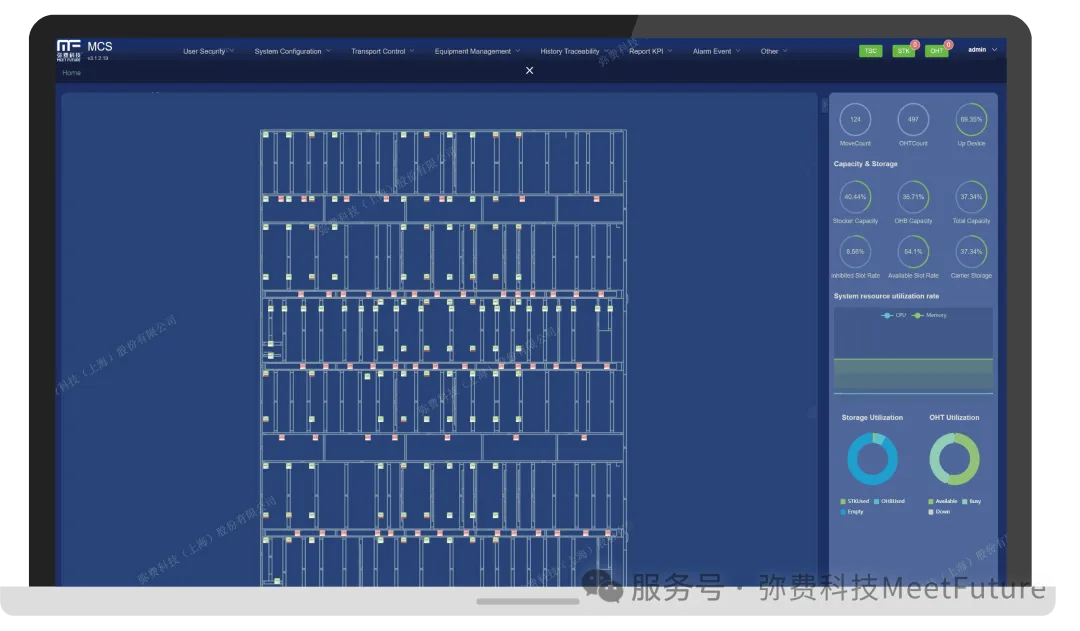
MeetFuture Technology Material Control System
By monitoring equipment status, storage capacity, and transport task execution in real time, the MCS uses predefined scheduling algorithms to optimize material flows and transport routes. It helps ensure efficient, continuous, and reliable production while providing comprehensive system monitoring, data analysis, and exception-handling capabilities.The MCS therefore serves as a critical middleware layer connecting the upper-level Manufacturing Execution System with lower-level equipment control systems.
However, the true barrier to MCS delivery has never been software development alone.
It lies in whether the supplier can work effectively within a real wafer fab—integrating and commissioning the system across different process layouts, equipment configurations, interface logic, and operating constraints, while ensuring stable long-term operation. For an AMHS provider, the ability to deliver an MCS is ultimately a comprehensive test of its on-site systems engineering capabilities.

MeetFuture Technology MCS implementation architecture
To date, MeetFuture Technology has received orders for 11 MCS projects and completed deliveries across 8 fabs. At its largest customer site, the system supports a transport volume of up to 200,000 moves per day.
These figures represent more than a simple accumulation of projects. The systems delivered were not replicas of a single standardized solution. MeetFuture Technology's MCS has completed integration and validation across diverse equipment and factory automation ecosystems, including AMAT, IBM, Semi-Tech, domestic FA systems, and PXSemi. The projects cover a variety of complex scenarios, including greenfield fabs, system replacement and retrofit projects, and capacity expansion programs. Each delivery has been a process of validating, refining, and implementing the system within a real customer production environment.
More Than a Standardized MCS Solution
China's semiconductor manufacturing industry is currently undergoing a critical period of capacity expansion and process evolution. New fabs are no longer being built simply to replicate existing production capacity. Increasingly, they are being developed around differentiated applications such as specialty processes, advanced packaging, and compound semiconductors. As a result, production processes and material handling constraints can vary significantly from one fab to another.
For these facilities, standardized MCS solutions provided by established global AMHS suppliers may be sufficient to support basic production flows. However, their compatibility can become limited when customers require specialized transport rules, non-standard interface integration, or dynamic priority adjustments.

A further challenge is that large international suppliers are often constrained by global product strategies and cost considerations, making them less likely to offer extensive customization. Even when customized services are available, they may involve substantial additional costs and lengthy response cycles.
MeetFuture Technology developed its MCS in direct response to this market need. Beginning with the actual material transport requirements of each customer's fab, the company combines a highly flexible system architecture with a localized engineering team. The system can be adapted to specific production layouts, equipment combinations, and operating practices, providing a more closely matched MCS solution rather than requiring the fab to accommodate a predefined, one-size-fits-all standard.
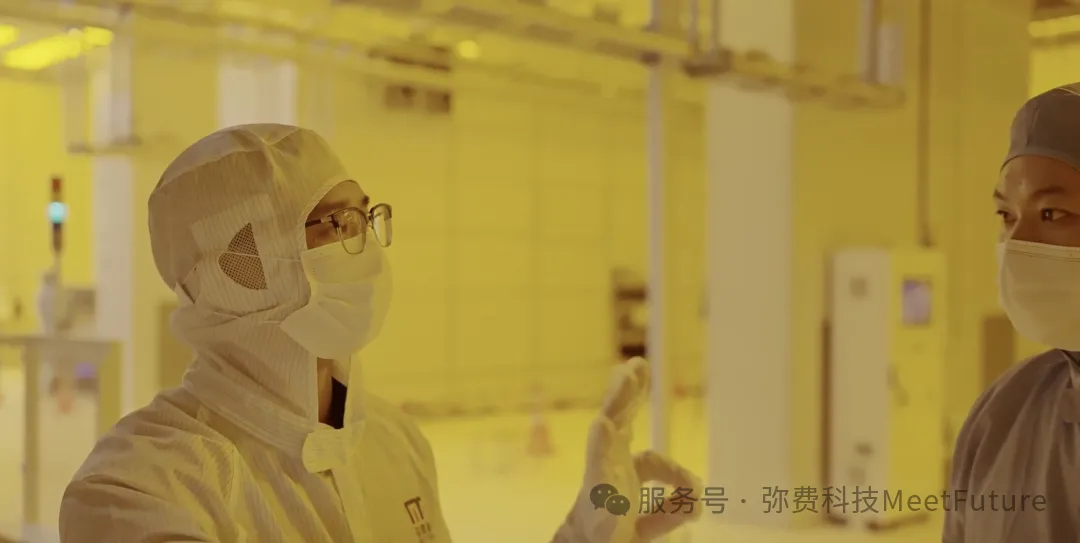
From Executing Requirements to Helping Define Them
Experienced AMHS professionals remain scarce, particularly in China. During the initial planning stages of many wafer fab projects, customers may not yet have sufficient internal resources or experience in MCS planning and implementation.
A reliable MCS partner therefore cannot simply build according to a predefined blueprint. It must be capable of working alongside the customer to identify and structure requirements, provide professional guidance, and dynamically refine those requirements as the project progresses.
Drawing on practical experience from multiple fab MCS projects, MeetFuture Technology has established a systematic body of knowledge and engineering methodology covering requirement analysis, system design, on-site integration, and joint commissioning. Even when customer requirements have not yet been fully defined, the company can provide professional guidance to ensure that the MCS genuinely supports production objectives rather than simply satisfying a checklist of functions.
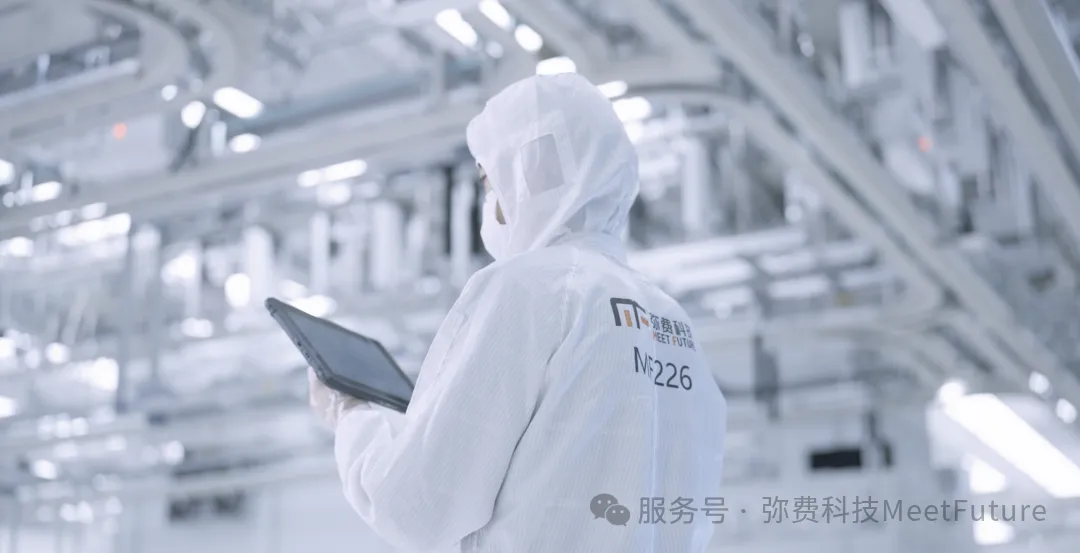
"Our MCS was not designed solely in a laboratory. It was shaped and refined through the requirements encountered at customer sites," said the head of MCS products at MeetFuture Technology. "In domestic fabs, unexpected constraints can arise in many forms. They may involve priority rules for a particular interbay section, a non-standard handshake protocol used by a specific piece of equipment, or a customer's preference to retain established operating practices. These details ultimately determine whether an MCS can truly be used in production. Our starting point has always been to understand the customer's actual material transport scenarios and allow the system to adapt to the production line—not require the production line to adapt to the system. The delivery of 8 fab projects represents a continuous process of moving closer to customer requirements while accumulating, refining, and strengthening our system capabilities."
Choosing an MCS Means Choosing a Long-Term Systems Partner
For today"s wafer fab customers, selecting an MCS is not simply a matter of choosing a scheduling software platform. It means choosing a long-term partner with system-level capabilities, on-site project experience, and the ability to collaborate throughout the complete project lifecycle. The true value of an MCS is not determined solely by how many functions appear on its specification sheet. It depends on whether the provider has a comprehensive understanding of fab operations, equipment ecosystems, interface logic, engineering implementation, and long-term production requirements.
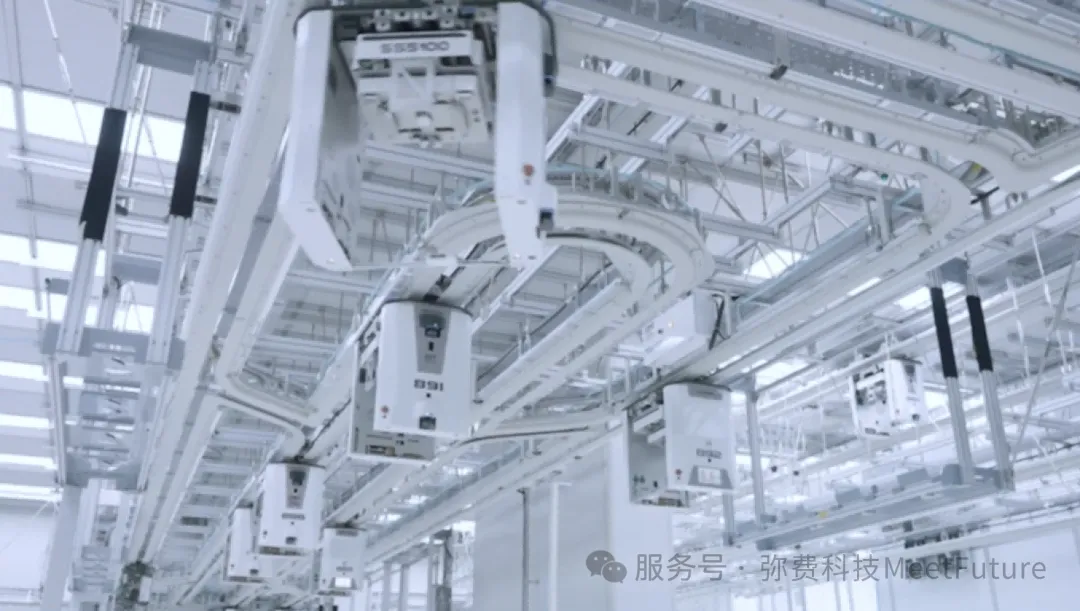
MeetFuture Technology continues to develop its OHT systems, Stockers, and core system capabilities around the requirements of semiconductor AMHS applications. The company integrates its MCS scheduling capabilities with its equipment development, interface integration, engineering implementation, and project delivery capabilities. This capability building is not intended merely to complete a standalone product. It is designed to address the more practical, complex, and long-term requirements that wafer fabs place on automated material handling systems. The objective is to provide an integrated solution that can be deployed in a real production environment, adapt to changes on site, and support the stable, long-term operation of the fab.

Interest in China's AMHS industry continues to grow. More companies are entering the market, and more individual products are being introduced. However, what ultimately determines whether a company can achieve sustainable growth is not its ability to develop or promote a single product. It is whether the company has crossed a long-standing threshold in the global AMHS industry: the ability to deliver a complete and integrated system solution.
For a domestic AMHS company, remaining at the standalone-product stage means standing only at the entrance to the market. Crossing this threshold establishes the capability foundation required to progress from domestic substitution to global competition.
Through MCS project deliveries across 8 fabs, MeetFuture Technology has repeatedly and rigorously validated its integrated system solution capabilities in real customer production environments.